No err twice: Why We Invested in NoFire AI
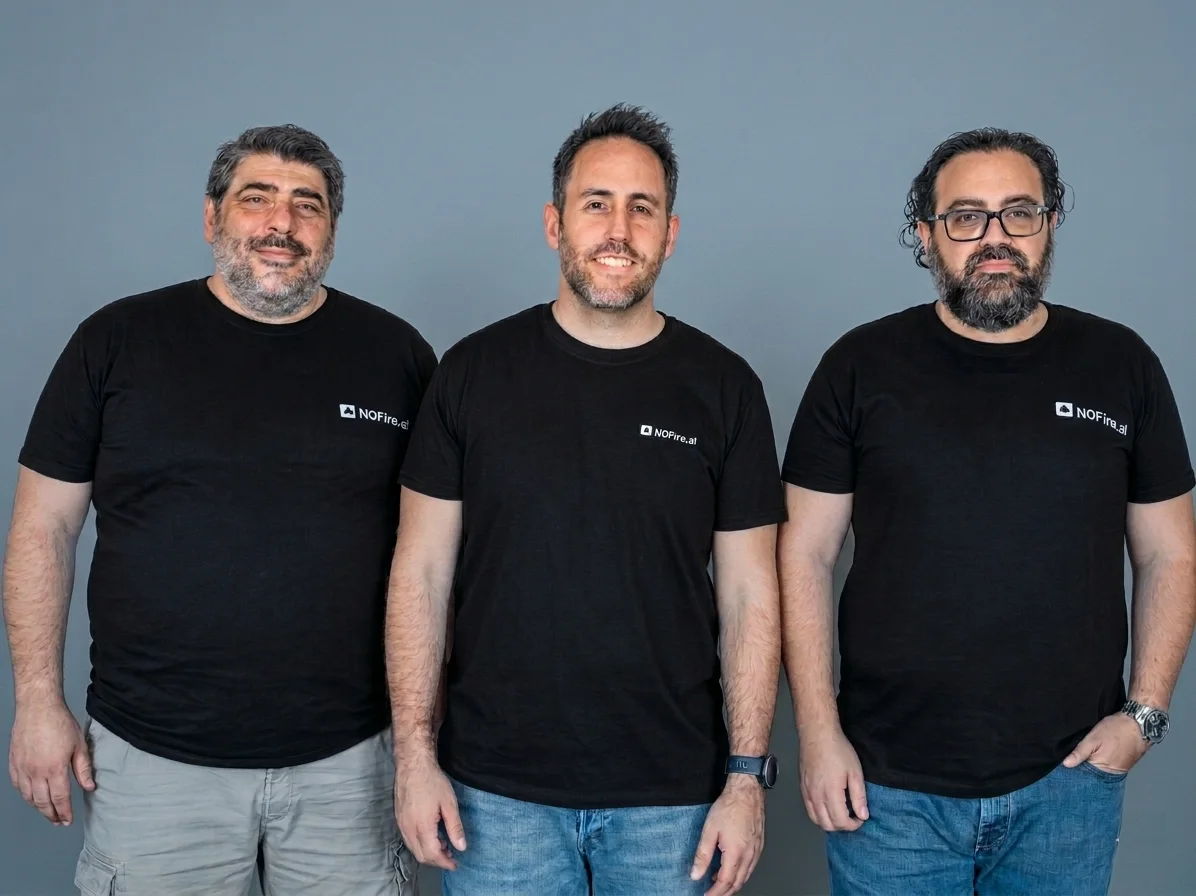
As the co-founder of Bugsense, a developer tool for mobile app Real User Monitoring, back in the distant year of 2011, we had an ambitious vision. We envisioned a feature where our tool would automatically capture a crash's stack trace, search through StackOverflow and developer mailing lists, and provide you with instant, contextual hints on how to actually fix the error. Well, we never built it but we thought this is where tech should head.
After we got acquired by Splunk, I vividly remember a rainy morning in our Seattle office around 2015. At the time, expectations around self-driving cars were ballooning, and the industry was obsessed with automation. During a brainstorming session about the future of our product line, I turned to my colleagues and said: "All the products we are making are arcane and today's approaches are too passive. Why are we forcing humans to stare at timecharts, trying to find a needle in a haystack of logs? If AI systems can drive cars on our chaotic, unpredictable roads, they should easily be able to take care of the software systems they run on, right?"
Of course, everyone in the room scoffed at the idea. We moved on and focused on dashboards to visualize CI/CD activity.
But the idea stuck with me. For a decade, I watched legacy monitoring tools build bigger, more expensive data lakes while developers spent more and more hours reactively firefighting, staring endlessly at dashboards looking for the needle in the haystack, something easy for machines but cruel for people. And along with that, observability bills ballooned too. I had to wait ten years for my childhood friend, Spiros Economakis, to show me the MVP of NoFire AI. When I saw it, I knew the self-driving pilot for IT infrastructure had finally arrived.
Today, we are thrilled to announce that Marathon Venture Capital is leading the seed investment in NoFire AI to build the next-generation reliability platform, shifting global engineering from reactive firefighting to autonomous, proactive prevention.
The "Vibe Coding" Crisis and the Agentic Code Tsunami
We are currently living through an unprecedented inflection point in software development. The rise of generative AI coding assistants and autonomous agents (powered by platforms like Claude, Codex, Cursor etc) has poured rocket fuel on the software lifecycle. Code is now being generated, altered, and shipped to production at a velocity that completely eclipses human capacity for manual code reviews or architectural oversight. The era of artisanal software has given way to industrialized outputs.
While the velocity of code creation has scaled exponentially, the engineering lifecycle dedicated to running and maintaining production systems has remained stubbornly human-dependent. Site Reliability Engineering (SRE)—the critical function responsible for keeping digital platforms available, fast, and healthy—is hitting a hard wall. Traditional SRE and operations teams are drowning in a deluge of telemetry data (logs, metrics, and traces) flowing from complex, distributed, cloud-native environments.
When an incident strikes in a modern Kubernetes cluster, developers are forced to context-switch between disconnected dashboards, manually stitch together timelines, and fight through deafening alert noise. SRE cannot scale to keep up with the agentic code tsunami if it remains a manual, reactive firefighting exercise. We need an AI SRE layer capable of cross-domain reasoning and autonomous remediation at machine speed.
Introducing NoFire AI:
First of all, NoFire doesn't ask you to throw away your existing monitoring tools or move your data into yet another database. That's a painful process nobody wants. Instead, it sits quietly on top of what you already use, connecting via simple APIs.
It works by pulling together three key pieces of the puzzle: what your system looks like, what changed, and why it broke. Here is how they do it, without the academic buzzwords:
Real-time mapping of your entire stack: Modern software is a chaotic web of connected services. When one small thing fails, it triggers a domino effect that brings down other systems far away from the root cause. NoFire automatically maps all these invisible connections in real-time—connecting code changes, databases, and servers so you can see exactly how a failure ripples through your system.
Red-flagging risky code before it goes live: Most outages happen because a human pushed a change. NoFire sits inside your deployment pipeline and acts like a smart safety guard. Before a developer pushes new code, it checks the update against your past incidents and performance history. If it looks like something that broke things in the past, it flags it immediately, stopping the fire before it even starts.
A collective memory for your team: We’ve all been there: a critical system goes down, and only one person in the company knows how to fix it because they solved it six months ago. If they leave, that knowledge is gone. NoFire acts as a shared brain for your engineering team. It remembers the cause and the fix for every single incident, making sure that when a problem is solved once, it stays solved forever.
Most tools on the market just shout "Hey, something is wrong!" and flood you with a hundred alerts. That just creates panic. NoFire is different. Its engine actually traces the path backward, ignoring the noise to point you to the exact line of code or server setting that caused the crash. You get an answer in minutes, not hours of stressful debugging.
The Band Gets Back Together
Our journey with this team doesn’t start in a pitch; its roots run decades deep, stretching back to our childhood in Sparta, Greece. Spiros and I grew up together, dreaming of technology long before we both ended up working for tech companies in Silicon Valley, navigating the high-intensity world of US tech startups.
Years later, I had the privilege of introducing Spiros to Antonios Chalkiopoulos, who was then building Lenses.io, a pioneering data enterprise that Marathon backed and ultimately saw through a highly successful exit to Celonis. Spiros joined Antonios to head cloud operations, and together they built an exceptional operational engine serving several Fortune 500 customers. When you back world-class founders, the ultimate reward is the opportunity to back them again. Working with Antonios and Spiros once more feels like a natural, deeply trusted homecoming.
Shortly after the team was joined by Panagiotis Moustafellos as CTO a prominent technical leader who had spent a decade scaling Elastic Cloud’s massive multi-cloud SaaS offering across dozens of global regions. Shortly after Anastassios Nanos joined, a world-class systems researcher specializing in virtualization and low-level hypervisors—you know things like urunc. When professionals of this caliber leave comfortable, highly prestigious leadership roles to build something from the ground up, you don't just pay attention. You write the check.
Spartans Do More with Less
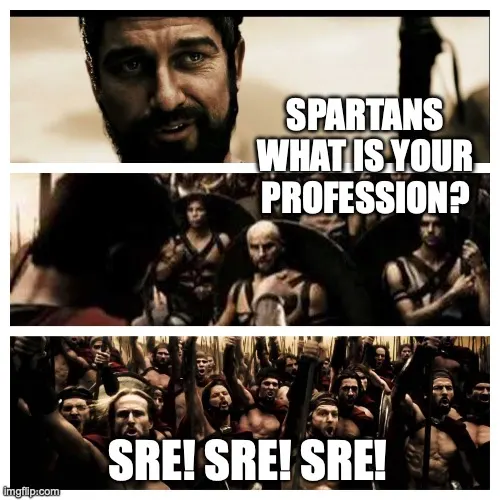
Both Spiros and I hail from Sparta. You know, the actual one, Sparta, Greece.
In our culture, that means we believe in accomplishing more with less. It means building robust, high-performance systems without bloated budgets, unnecessary overhead, or empty promises. With NoFire AI, you will get rightly priced products backed by a team that gives absolutely everything to support the customer. No fancy words, no hyper-inflated marketing, and no BS.
Fewer words. More actions.
We are incredibly proud to partner with Spiros, Panagiotis, Antonios, Anastassios, and the entire team on this journey. The era of manual, stressful firefighting is over. The era of autonomous, self-healing software infrastructure is here.
"τὸ δὶς ἐξαμαρτεῖν οὐκ SRE σοφοῦ ἐστί." (To err twice is not the mark of a wise SRE.)